
INSIDE:
NEWS/STORIES/ARTICLES
Book Reviews
Columns/Opinion/Cartoon
Films
International
National
NW/Local
Recipes
Special A.C.E. Stories
Sports
Online Paper (PDF)
CLASSIFIED SECTION
Bids & Public Notices
NW Job Market
NW RESOURCE GUIDE
Consulates
Organizations
Scholarships
Special Sections
Asian Reporter Info
Contact Us
Subscription Info. & Back
Issues
FOLLOW US
Facebook
ASIA LINKS
Currency Exchange
Time Zones
More Asian Links
Copyright © 1990 - 2024
AR Home
My Turnby Dmae Lo Roberts |
 |
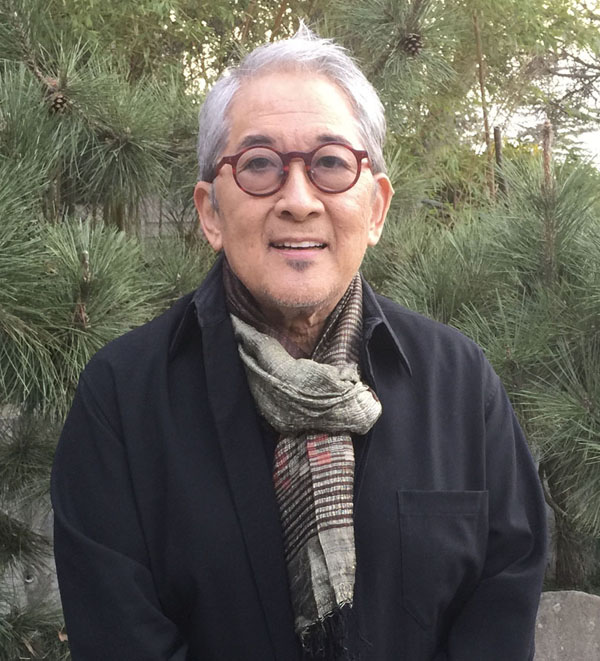
Philip Kan Gotanda. (Photo courtesy of the University of California, Berkeley)
From The Asian Reporter, V34, #3 (March 4, 2024), page 6.
Yohen and playwright Philip Kan Gotanda
For more than 40 years, Philip Kan Gotanda has been writing plays, screenplays, and opera librettos that speak to the Asian-American experience. Many of his stage plays have centered on the trauma and aftermath experienced by Japanese Americans who were imprisoned in World War II incarceration camps, including After The War Blues and Sisters Matsumoto. Other plays, such as Yankee Dawg You Die, revealed the lack of opportunities and roles for Asian Americans in Hollywood, and another, The Wash (which Gotanda adapted for film), focused on an old, bigoted, Japanese-American traditionalist unable to reconcile the needs of his wife and two daughters with his own conservative view of life.
With the depth and breadth of these plays, Gotanda — along with his contemporary, David Henry Hwang — is credited with changing the landscape and carving a pathway for Asian-American playwrights in American theater. Gotanda is a professor at the University of California, Berkeley, and the winner of numerous fellowships and awards such as the Guggenheim, Sundance, and Lila Wallace. More recently, he received the 2020-2021 Dramatists Guild Foundation Legacy Playwrights Initiative Award, was a 2023 inductee to the American Academy of Arts & Sciences, and in 2024 was honored with the United States Artists Fellowship award.
I’ve read Gotanda’s plays for many years and finally met him in 2016 when Theatre Diaspora produced a staged reading of After The War Blues. He’s not only a brilliant writer, but also an affable and generous spirit who mentors and supports not only his students, but nearly every person he meets. And he’s willing to experiment with different artforms, not just theater. He recently wrote the libretto for Both Eyes Open, an original opera about a farmer and his wife in 1942 after Executive Order 9066 was enacted to imprison Japanese Americans.
"It’s not a literal kind of historical recounting, in part because I feel that’s been done and done well ..." Gotanda said. "The idea was to perhaps explore more in an impressionistic way, the psychological journey of what happened internally as these events happened to individuals."
This March and April, I am directing Gotanda’s play, Yohen, for PassinArt: A Theatre Company. The play is an intimate story about the marriage and life of an interracial couple in their 60s. The husband is a Black ex-service member and his spouse is a Japanese military wife. The two have hit a crossroads in their 30-year marriage.
In the description Gotanda included with the script, he wrote: "Interestingly, the idea that yohen pertains to coloring, is in fact, more appropriate to this American play where we live in a highly racialized world, and where the tradition is to focus on color."
The idea of exploring a play about two people of different races and cultures within the context of marriage really interested me. My own history as the biracial daughter of a white military father and a Taiwanese mother lent a personal lens into this drama. I witnessed firsthand the challenges and arguments my parents experienced as they forged an unusual path in America at a time when some states still banned interracial marriage. The story Gotanda tells in Yohen reminds me of my parents in many ways. It’s rare for a play to focus on not only a couple in their 60s, but one that is interracial, and I’m eager to begin rehearsals this month.
After Yohen opens, Gotanda will travel to Portland the first weekend in April to see the show and participate in a playwright talkback with the audience. It will be great to have this esteemed master playwright back in Oregon to hear about his insights into the changing landscape of Asian-American arts. Thanks largely to his writings and efforts, American theater now regularly features Asian-American plays in their seasons.
"I’ve experienced earlier moments when it seemed like, ‘Hey, we’ve arrived,’" Gotanda said. "You know we’re part of the institutions now, and for me, sensing that and feeling that was the biggest kind of change I’ve sensed. And it’s a big one."
Gotanda has uploaded most of his stage plays and films to his website, <www.philipkangotanda.org>. Members of the community can actually read, watch, or download them on the site. It’s rare for a playwright to be that accessible. He wants people to enjoy his works and hopefully produce them. That’s part of his teacher and mentor spirit — to share his work for others to learn.
Yohen is featured March 29 through April 21 at the Brunish Theatre inside Antoinette Hatfield Hall, located at 1111 S.W. Broadway Avenue in Portland. I hope you’ll join me April 5 through 7 to welcome Gotanda. To learn more, or to purchase tickets, please visit <www.passinart.org>.
Read the current issue of The Asian Reporter in its
entirety!
Go to <www.asianreporter.com/completepaper.htm>!
Opinions expressed in this newspaper are those of the
authors and not necessarily those of this publication.