INSIDE:
NEWS/STORIES/ARTICLES
Book Reviews
Columns/Opinion/Cartoon
Films
International
National
NW/Local
Recipes
Special A.C.E. Stories
Sports
Online Paper (PDF)
CLASSIFIED SECTION
Bids & Public Notices
NW Job Market
NW RESOURCE GUIDE
Consulates
Organizations
Scholarships
Special Sections
Asian Reporter Info
Contact Us
Subscription Info. & Back
Issues
FOLLOW US
Facebook
ASIA LINKS
Currency Exchange
Time Zones
More Asian Links
Copyright © 1990 - 2024
AR Home

Where EAST meets the Northwest
|
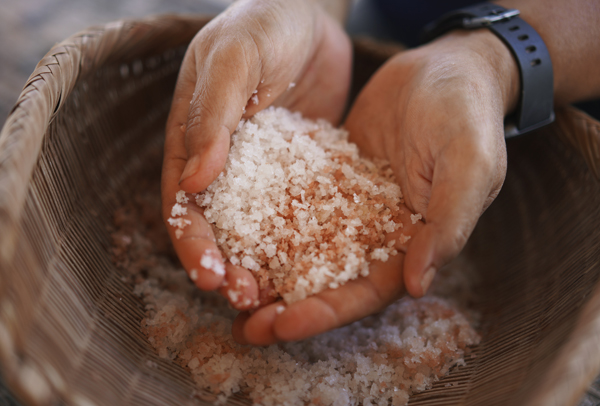
SACRED TRADITION. Ma Kane Turalde digs dark, wet clay into buckets to rebuild his family’s salt beds at the Hanapepe salt patch in Hanapepe, Hawai‘i, in this file photo. After the salt beds, or "loi" — which are used to make Hawaiian salt — are smoothed out using river rock, they are then lined with rich black clay and left to dry. (AP Photo/Jessie Wardarski) From The Asian Reporter, V34, #2 (February 5, 2024), page 20. How Native families make salt at one of Hawai‘i’s last remaining salt patches By Deepa Bharath The Associated Press HANAPEPE, Hawai‘i — The process of making salt from sea water is a lengthy and laborious one that requires patience, perseverance, and stoicism. Work that salt makers do for hours or even days could be wiped out by passing rain showers, which are all too common on the island of Kauai. The multi-step process used by Native Hawaiian families is several centuries old. How is salt made at the Kauai salt patch? Step 1: Deep wells, or puna, are cleaned of dirt and debris so the sea water that enters them through underground channels is clean and conducive to salt making. Step 2: The salt beds, or loi, are smoothed out using river rock to seal the rich black clay and mud mixture. Step 3: Sea water from the wells is transferred to rectangular holding tanks known as waiku. The brine in the waiku begins to evaporate and salt crystals begin to form on the surface. Step 4: The salt maker gently pours this brine from the holding tanks into the drying beds. Step 5: Over several weeks, the water evaporates and slushy layers of white salt begin to form. This salt is harvested by carefully and slowly raking the large flakes from the bed and transferring them to baskets. Step 6: The harvested salt is then dipped back into the sea water to rinse off debris. Step 7: Once rinsed, the salt is left to dry in the sun for at least four weeks. During a good salt making year, a family may complete three harvests repeating the same process. Can the salt be sold? No. This sacred salt can be traded or given away, but must never be sold. The amounts harvested annually have significantly shrunk. Five decades ago, families gave away 5-gallon buckets full of salt. Today, it is handed out in sandwich bags. How is the salt used? Hawaiians use it in cooking, healing, rituals, and as protection. Typically, the whitest in color is used as table salt, the pink salt is for cooking, and the red is used in rituals and blessings, but that could vary depending on the circumstance and the cultural or spiritual context. Malia Nobrega-Olivera, who is working to preserve the sacred tradition, believes Hanapepe salt has the power to ward off bad energy. After the Maui fires in August that claimed 100 lives, spiritual practitioners from the island specifically requested white Hanapepe salt from Nobrega-Olivera to bless and "calm" the traumatized island, particularly areas that housed makeshift morgues. The salt makers continue to send their salt to survivors who are rebuilding their lives. They also plan to visit Maui to share their knowledge of salt making with the locals. Associated Press religion coverage receives support through The AP’s collaboration with The Conversation US, with funding from Lilly Endowment Inc. The AP is solely responsible for content. * * * Asian Reporter web extra, February 5, 2024
PAAKAI PRACTICE. Malia Nobrega-Olivera, a Native Hawaiian salt maker, holds Hawaiian salt, or "paakai," in Hanapepe, Hawai‘i, in this file photo. An important part of this cultural and spiritual practice is that the salt can only be traded or given away, not sold. (AP Photo/Jessie Wardarski, File) Native Hawaiian salt makers combat climate change and pollution to protect a sacred tradition By Deepa Bharath The Associated Press HANAPEPE, Hawai‘i — On a warm summer afternoon, Tina Taniguchi was on her hands and knees scraping dirt off an oblong depression in the ground. Thick brown hair peeked out from her coconut leaf hat. Splotches of mud stuck to her t-shirt and speckled her smiling face. Taniguchi smiles a lot when she’s working in her corner of the Hanapepe salt patch on the west side of Kauai — a terracotta plot of land about the size of a football field — dappled with elliptical pools of brine, crystallizing in clay beds. "It’s hard work, but for me it’s also play," Taniguchi said, adding with a laugh, "I play in the mud all day." Taniguchi’s family is one of 22 who over generations have dedicated themselves to the cultural and spiritual practice of "paakai," the Hawaiian word for salt. This is one of the last remaining salt patches in Hawai‘i. Its sacred salt can be traded or given away, but must never be sold. Hawaiians use it in cooking, healing, rituals, and as protection. Over the past decade, this tract has been under constant threat due to development, pollution from a neighboring airfield, sand erosion from vehicle traffic, and littering by visitors to the adjacent beach. In addition, climate change threatens to obliterate the practice with rising sea levels and modified weather patterns. This year, the salt-making season lasted barely three months from July to September because of above-average rainfall. During a good year, work typically begins in May and ends in November. Taniguchi drives about an hour to get here. For her, it’s church and play rolled into one — the time she forges a spiritual connection to the land. "This would be a religious practice of mine for sure," Taniguchi said. "My dad raised us saying that these mountains are his church, and the ocean is where you get cleansed." Malia Nobrega-Olivera’s grandfather was instrumental in forming the group of salt-making families called Hui Hana Paakai. She is also an educator and activist who leads efforts to preserve this centuries-old tradition. The organization’s goal, she said, is to speak with a collective voice when communicating with the landowner, the state of Hawai‘i, whenever issues arise. Nobrega-Olivera said the salt patch is part of lands taken away from Native Hawaiians after the U.S.-backed overthrow of Hawai‘i’s monarchy in 1893. "Regardless of what a piece of paper might say, we are stewards of the area and this land is our ‘kupuna’ (elder)," she said. Nobrega-Olivera looks fondly at black-and-white photos of her grandparents, uncles, and aunts from about five decades ago, standing near hillocks of shimmering salt. Back then, they would give away 5-gallon buckets. Today, they hand out salt in sandwich bags. Trading salt for other items continues to this day, she said, adding that her late father once traded salt with a man who was selling piglets on Craigslist. Born from the need to preserve fish and other meats, the process of turning sea water into salt can be slow and grueling. The season begins once the rain stops and waters recede, exposing the salt beds. Ocean water travels underground and enters the wells. Each family has their own well, known as a "puna." As water enters the well, so do tiny, red brine shrimp, giving Hanapepe salt its unique sweetness, said Nobrega-Olivera. Eventually, water from the wells is moved into the salt beds, which have been cleaned and lined with rich black clay. There, layers of salt crystals form. Typically, the top layer, which is the whitest, is used as table salt. The middle layer, pinkish, is used in cooking while the bottom layer, with a deep red hue, is used in blessings and rituals. After the Maui fires in August that claimed 100 lives, spiritual practitioners there specifically requested white Hanapepe salt from Nobrega-Olivera to bless and "calm" the traumatized island, particularly areas that housed makeshift morgues. The salt makers continue to send their salt to survivors who are rebuilding their lives, so they can "make their food delicious and bring some of that joy into their lives," she said. Nobrega-Olivera believes Hanapepe salt has the power to ward off bad energy. "When I walk into a difficult meeting, I put a salt crystal on my tongue as a reminder to watch my words." Many of the salt-making families are Christian. Nobrega-Olivera said reconciling their Christian faith with their spirituality as Native Hawaiians can be challenging, but it happens organically. "There are some gatherings where we may honor our deities," she said. "Other occasions may call for a Christian prayer in Hawaiian or English, or both. You do what feels right for that space." Nobrega-Olivera believes western science and Indigenous knowledge can combine to combat the effects of climate change and save the salt patch. The steps include building up the wells’ edges so when sea levels rise, the water won’t inundate the area. Another important step: preventing sand dune erosion from vehicle traffic to the beach, which causes the waves to crest and flood the patch. "Some ask us why we can’t move this practice to a different location," she said. "That’s impossible because our cultural practice is particular to this land. There are elements here that make this place special for making this type of salt. You cannot find that anywhere else." Those working on the salt patches enter with reverence. Nobrega-Olivera said menstruating women typically do not come and red clothes are avoided. Kanani Santos said he removes his shoes before entering because he likes to "be connected to the ground." He enjoys walking there at sunset, when the brick-red patch of land appears bathed in gold and the salt crystals sparkle like magic dust. "I say a little prayer, ask for blessings to have a good harvest, to have a quiet soul and to embrace the moment," he said. Kurt Kuali’i, a chef whose family has made salt for 10 generations, choked up when speaking about this as his "kuleana," which means responsibility. "I get moments of silence here like church," he said. "I believe in akua (god), a higher power. This is where I come to connect with that higher power, teach the children and be with family. There’s good energy here." Even when rain disrupts an entire day’s work, Kuali’i says he knows it’s "god telling us it’s not time yet, to slow down." The best part of salt making is giving it all away, he said. "Sharing is Hawaiian. This is something you make with your hands. I may not be the best at everything, but I can make Hawaiian salt." Kane Turalde has been coming to the salt patch since he was 7. He is 68 now, a Native Hawaiian educator and canoe-racing coach. He has protested in the past to block luxury homes and other development near the salt patch, which he says would have created more traffic and pollution. "I always come here in the spirit of akua," he said. "Before I leave home, I call my ancestors here so when I arrive, they are here." In his family’s home, Turalde’s grandmother kept a bowl of salt by the door. Everyone would take a pinch and say a prayer before going out, for protection, he said. With the resurgence of Hawaiian culture and language on the islands, Nobrega-Olivera said she now thinks about how to transmit this knowledge to younger generations. One way she honors the Hanapepe salt patch is by composing "mele," or Hawaiian songs and chants. She recently taught some school children one of those chants whose chorus is "aloha aina," which means "love of the land." Her eyes welled up as she saw their enthusiasm to learn the mele. "Aloha aina captures our philosophy, the reason we do this," Nobrega-Olivera said. "You take care of the land, and the land takes care of you." Associated Press religion coverage receives support through The AP’s collaboration with The Conversation US, with funding from Lilly Endowment Inc. The AP is solely responsible for content. Read the current issue of The Asian Reporter in
its entirety!
|