INSIDE:
NEWS/STORIES/ARTICLES
Book Reviews
Columns/Opinion/Cartoon
Films
International
National
NW/Local
Recipes
Special A.C.E. Stories
Sports
Online Paper (PDF)
CLASSIFIED SECTION
Bids & Public Notices
NW Job Market
NW RESOURCE GUIDE
Consulates
Organizations
Scholarships
Special Sections
Asian Reporter Info
Contact Us
Subscription Info. & Back
Issues
FOLLOW US
Facebook
ASIA LINKS
Currency Exchange
Time Zones
More Asian Links
Copyright © 1990 - 2026
AR Home
Where EAST meets the Northwest
|
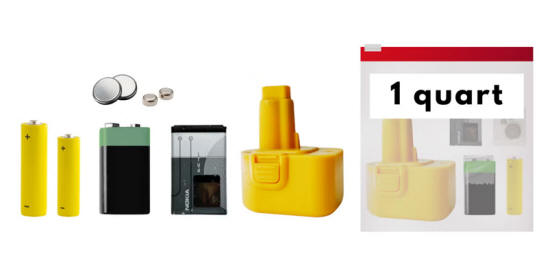
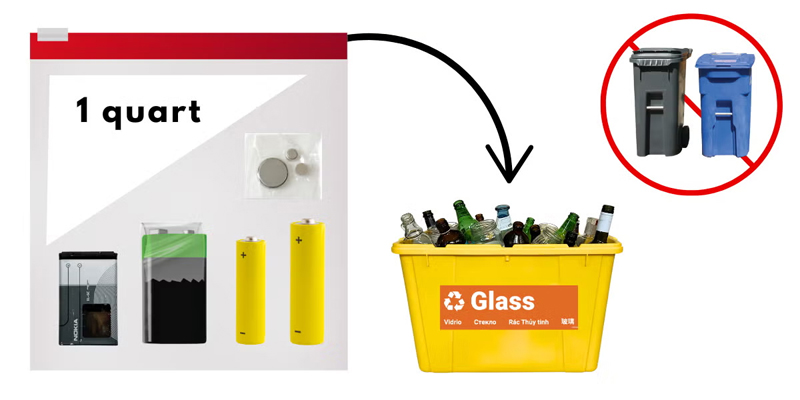
(Photos courtesy of the City of Portland) From The Asian Reporter, V36, #4 (April 6, 2026), pages 10 & 14. You can give old batteries a new life by safely recycling them By Adithi Ramakrishnan The Associated Press NEW YORK — When household batteries die, it’s hard to know what to do with them. So they get shoved into a junk drawer or sheepishly thrown into the trash. But dead batteries aren’t quite finished. They can leak heavy metals like cadmium and nickel into soil and water once they reach the landfill. Some of them can also overheat and cause fires in garbage trucks and recycling centers. The good news is, safely disposing of your batteries takes just a few steps. They’ll get shipped to recycling centers that break down their contents to make new things. Battery recycling processes could use some fine-tuning, but it’s still a simple and responsible way to get rid of them. Recycling old batteries "keeps you safe, keeps the waste industry safe, keeps the first responders safe, and responsibly sees that battery reach a proper end of life," said Michael Hoffman, president of the National Waste and Recycling Association. Small batteries can have a big environmental impact Batteries keep things running in our homes, powering everything from alarm clocks and TV remotes to gaming controllers. Millions are bought and used every year in the U.S., according to the Environmental Protection Agency (EPA). They leave their stamp on the environment at nearly every stage of their life span. Many of the materials used to make batteries — elements like lithium and nickel — are mined. Over half the world’s cobalt reserves are in Congo. Once mined, those materials are shipped around to be refined, fashioned into a battery, and packaged for sale. All the ships, trucks, and planes moving them add to batteries’ carbon footprint. Making the batteries can release carbon emissions and pollution into the air and atmosphere, too. Though household batteries are far smaller than the big ones that power EVs and electric bicycles, there are a lot more of them and it’s worth figuring out how to get rid of them. "One person’s single battery is not necessarily a lot," said environmental scientist Jennifer Sun with Harvard University. "But everyone uses many batteries." Recycle batteries at a registered drop-off site To begin, wrangle your old batteries and figure out what kind they are. Batteries "come in all shapes and sizes, but what’s inside differs," said materials scientist Matthew Bergschneider of the University of Texas at Dallas. Alkaline and zinc-carbon batteries are generally single-use and come in AA, AAA, and more. These can be safely thrown in the household trash in most places, but the EPA still recommends recycling them so that their materials can be made into something new. Lithium-ion batteries — commonly found in things like power tools and cordless vacuums — are a risk to cause fires and leak toxic gasses in garbage trucks and landfills. A lot of rechargeable batteries are lithium-ion, but more single-use batteries are being made this way too. Be sure to look up battery disposal laws for your area: Places like New York, Vermont, and Washington, D.C. have special rules about throwing away household or rechargeable batteries. Once you’ve corralled your batteries, tape their ends or put them in plastic bags to avoid the possibility of sparking. Then, take them to a drop-off location. How easy or hard this is depends on where you live. Many hardware and office supplies stores accept old batteries. Look into city and state drop-off programs or search by ZIP code using The Battery Network, a nonprofit geared toward safe battery recycling. Have a location in your home to collect the batteries over time and then "at some point, hopefully among all the other things that we all have in our lives, you can find a convenient drop-off location," said Todd Ellis of The Battery Network. If your batteries look swollen, cracked, or are leaking, don’t drop them off. You’ll need to get in touch with your local hazardous waste removal agency to figure out how to turn them in. Recycled batteries can have a second life Once batteries are dropped off at a collection site, they’re sorted by type and taken to a recycling facility where they’re broken down into their essential components — like cobalt, nickel, or aluminum. Some bits can be used to make new batteries or other things. Nickel, for example, can be used to make stainless steel products and alkaline batteries can be turned into sunscreen. Safely recycling a battery doesn’t cancel out the environmental cost of making it. But it does give the battery’s components their best chance at becoming something new. "You continue to recycle and you don’t have to go back to the Earth to mine," said public health expert Oladele Ogunseitan, who studies electronic waste at the University of California, Irvine. Good battery habits are also good for us. It protects against old or damaged batteries leaking toxic compounds into our cabinets and junk drawers. "I think it’s one of the simplest and most controllable actions that we can take to reduce our impact," said Sun, the Harvard scientist. The Associated Press Health and Science Department receives support from the Howard Hughes Medical Institute’s Department of Science Education and the Robert Wood Johnson Foundation. The AP is solely responsible for content. * * * REDUCE. REUSE. RECYCLE. Battery recycling has become easier these days because curbside battery collection is now part of customers’ regular garbage and recycling service. In the City of Portland, types that are can by recycled curbside include: AAA, AA, C, D, button-cell & coin, 6V, and 9V batteries; rechargeable and single-use batteries; batteries labelled Alkaline; batteries labelled Lithium, Lithium-Ion (Li-Ion), Nickel Cadmium (Ni-Cd), Nickel Metal Hydride (Ni-MH), and Nickel Zinc (Ni-Zn); small batteries that can be easily removed (old cellphones, cameras, etc.); and small tool batteries that fit in a sealed one-quart bag. (Photos courtesy of the City of Portland) From The Asian Reporter, V36, #4 (April 6, 2026), pages 10, 14 & 19. Recycling various small batteries is becoming easier PORTLAND — Battery recycling has become easier these days because curbside battery collection is now part of customers’ regular garbage and recycling service. Recycling batteries for many is now almost as simple as filling up a one-quart clear ziplock bag with batteries and setting them on top of all the glass in curbside glass recycling bins. Batteries — especially lithium-ion ones found in rechargeable devices — can catch fire if they are crushed, punctured, or exposed to heat. When tossed in the garbage or regular recycling bin, they pose a serious risk to garbage truck drivers, recycling workers, and the environment. In fact, the Metro Central and Metro South transfer stations in Oregon reported that there were 58 battery-related fires in 2025, with hundreds more occurring at waste facilities throughout the state. In the first year of Portland’s curbside battery recycling program, 20 tons of batteries were recycled. In June last year, the city reported that Portlanders safely taped, bagged, and set out more than 20 tons of batteries in their glass recycling bins. According to the city, 20 tons is similar to the weight of 4 adult elephants or 100 grand pianos. The City of Portland says it is grateful, as that’s "20 tons of batteries not sitting in landfills," or worse, sparking fires in garbage and recycling trucks or facilities, or exposing people to toxic chemicals. The recycled batteries also help in recovering valuable materials that can be turned into new products. In the Portland metropolitan area, people who live in a house, duplex, triplex, or fourplex can set out batteries on top of their curbside glass recycling. Those who live in larger apartment complexes or have workplace batteries to recycle should find battery recycling drop-off locations or mail-in options. The Metro Recycling Information Center is available to provide options Monday through Friday from 8:30am to 5:00pm by calling (503) 234-3000. Information is also available on the Metro website, <www.oregonmetro.gov/FindARecycler>. Batteries labelled "alkaline" can go right into a one-quart ziplock bag. Batteries that do not say alkaline will need one more step to help keep them from potentially catching fire — a little clear tape on both ends. Scotch tape applied to the positive and negative ends helps accomplish this, then the batteries can be placed into a one-quart plastic bag. In the City of Portland, types that are can by recycled curbside include: AAA, AA, C, D, button-cell & coin, 6V, and 9V batteries; rechargeable and single-use batteries; batteries labelled Alkaline; batteries labelled Lithium, Lithium-Ion (Li-Ion), Nickel Cadmium (Ni-Cd), Nickel Metal Hydride (Ni-MH), and Nickel Zinc (Ni-Zn); small batteries that can be easily removed (old cellphones, cameras, etc.); and small tool batteries that fit in a sealed one-quart bag. Batteries that need to be taken to drop-off facilities for safe recycling or disposal include: batteries that do not fit into a one-quart bag; vape pen & e-cigarette batteries; items with embedded or built-in batteries; cellphone, laptop, and tablet batteries; batteries from wireless headphones, Bluetooth speakers, fitness watches/bands, electric toothbrushes, reading lights, etc.; and anything that makes noise, lights up, heats up, or moves, and does not plug into a wall. The city advises, for your and everyone’s safety, please do not attempt to remove batteries that are not easily removed. Many garbage and recycling collection services are now recycling batteries. To learn more, please visit your city or county website. Read the current issue of The Asian Reporter in
its entirety!
|