Special to the Asian Reporter
Aficionados and occasional collectors alike may want to clear space on their reference shelves for this extensive guide to both Japanese "animé" and its American equivalent — cartoons.
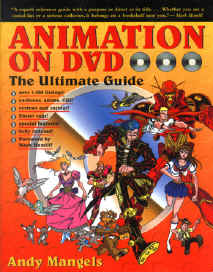
Touting more than 1,600 listings and a forward by veteran cartoon voice actor Mark Hamill (Batman’s Joker), it collects Japan’s not-just-for-kids animation with U.S. kiddy classics and obscure oddities in an encyclopedia of virtually all that’s so far been put on DVD.
From Tom and Jerry, Pokémon, and Disney feature films to Akira, Fritz the Cat, and South Park. Not to mention the 1963 hit "Astro Boy," which NBC imported from Japan for kids nationwide. Author Andy Mangels has catalogued the good, bad, and downright ugly with pictures, pithy paragraphs, and production data.
Animation on DVD comes equipped with an informative outline of the medium’s history for the uninitiated. Perhaps most interesting is its summary of Japanese animé and its predecessor "manga," or comics. Unlike American cartoons and comics, they have traditionally been for adults as well as kids, with topics and genres as diverse as movies.
Manga accounts for more than a third of all Japan’s printed material and animé is now taking the American market by storm, according to Mangels.
"In the U.S. market today, animé is one of the fastest-growing categories in video and DVD entertainment, as well as television syndication and toy licensing," the author notes.
He also sums up U.S. cartoon history beginning with the first cartoon in 1899, featuring matchstick characters, and fast-for- warding to the first sound-synchronized short, Disney’s "Steamboat Willie," which featured the debut of Mickey Mouse.
An extensive index, bibliography, and lists of resources round out this work, making it ideal for collectors and researchers. It even sports an intriguing chapter on so-called Easter eggs, which are hidden in some animation DVD productions.
When discovered in the animated story and activated via the DVD player, these hidden symbols reveal bonuses such as art galleries, bloopers, or mini-documentaries, the book explains. Where to find them and how to activate them in scores of animated flicks is graciously revealed.
Mangels was even kind enough to relegate R- and X-rated titles to a "mature/adult" section in the back of the book, with a parental advisory prelude. (Not to worry: photos of these DVD covers may be suggestive but not explicit.)
Indeed, those unaware of Japan’s grotesque genre of animé porn — often pedophilia, sadism, andmisogyny combined — may appreciate knowing what not to mistake for a mere "cartoon."
ANIMÉ TOP 10 ON DVD
1. Akira (1988, Pioneer)
2. Barefoot Gen (1983, Image)
3. Blood: The Last Vampire (2000, Manga)
4. Ghost in the Shell (1995, Manga)
5. Grave of the Fireflies (1998, Central Park Media)
6. Metropolis (2001, Columbia/TriStar)
7. Neon Genesis Evangelion (1995, ADV Films)
8. Princess Mononoke (1997, Disney)
9. Spirited Away (2001, Disney)
10. Trigun (1998, Pioneer)
-- Animation On DVD: The Ultimate Guide
|