By Ronault L.S. Catalani
Michael Ondaatje has done so many things. And so many things well. The Ceylon-born, Dutch-Tamil-Sinha-Portuguese mix Canadian writer has been plenty praised for his literary work. In the Skin of a Lion, The English Patient, and Anil’s Ghostare only three of his biggies.
Mr. Ondaatje has just as handily caught critical acclaim for his unconventional poetry and performance art. He has even scored high in Hollywood. The English Patient swept the 1997 Academy Awards by taking away nine Oscars, including Best Picture. So something less than a warm reception will do no harm. A single bad book may not beat the man down.
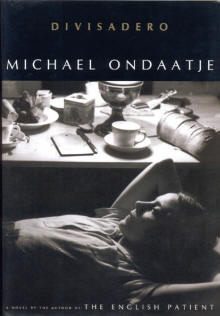
And so it is, after all this throat-clearing, after bestowing of respect for Michael Ondaatje’s great work, that I’ve got to say his newest novel, Divisadero, is really difficult to follow, and even harder to enjoy.
The three elements the author has so mastered in other works — lines and paragraphs so pretty each could stand alone outside a chapter, without the framework of a novel; his intimacy with his complex characters and their extraordinary crafts; and his absolute confidence in his authority to divert readers from his main narrative, taking us along elegant but articulate side streets and back stories — are all present in Divisadero. Just not in the right doses.
Mr. Ondaatje’s beautiful lines are there, certainly there. For example, he tells us of his character Lucien Segura, a French writer whose epic story is narrated through the character of Anna, a California ranch girl.
Anna writes: "He was never fully certain as to what made him write. He had seen his mother dance at her wedding with the clockmaker, just a few embraced steps. And once with a cat — his mother dancing with a cat in a meadow, he remembered that. It became for him this delicious, witnessed example. It was a way he could enter the world as himself."
But Mr. Ondaatje stumbles in those two other of his awesome skills. In The English Patient, he puts us inside the sensitive skin of his Sikh explosive expert, disarming touchy Nazi bombs; in Anil’s Ghost, we inhabit the unstable world and handle the tragic work of a Sinha forensic physician as she unearths bound and executed Sri Lankans. Divisadero’s characters are just as colorful: Tahoe card sharps, a First World War French soldier and writer, a San Francisco public defender’s investigator, a Roma jack of all trades. But I cannot get inside his characters; indeed, I’m annoyed at Mr. Ondaatje’s failure to get me there. Expectations are high.
Likewise, in his earlier works, I trusted Mr. Ondaatje’s forays from his main narrative. Readers have learned not to resist, and the author rewards our trust by returning us every time to his compelling mainstream, richer for his ornate diversions into character and historical back stories. In Divisadero, the back stories and their lovely back-back stories take me so far afield, so distant in time, so different in tone and texture, that after I’ve taken deliberate effort to adjust to these disparate worlds, I want to forget about the main frame. I forget its relevance. I wonder aloud why these multiple universes run in the same book. I am no longer the author’s trusting captive.
In short, maybe too much happens to too many people in Divisadero. I work way too hard keeping facts and faces and places working in concert. And I buy books, especially Michael Ondaatje’s books, for their fantastic flights away from my factually burdensome world.
|