Special to The Asian Reporter
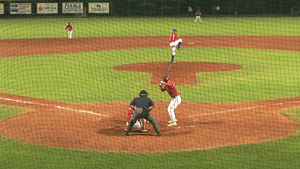
In this year’s Summer Olympics, host country China is determined to win as many medals as possible, no matter the event. Take baseball, for example. Even though baseball was played in China even before it was introduced to Japan, the Cultural Revolution virtually eliminated the sport from the country in the 1960s and ’70s, leaving an entire generation of children without the basic skills to play the game at any level. Undaunted by such obstacles, however, the Chinese government hired two former major-leaguers to teach the game to their team, a story that’s told in Out of Left Field, a one-hour documentary airing August 19 on Oregon Public Broadcasting (OPB).
The project began in the fall of 2003, when Major League Baseball’s international division put the Chinese government in touch with Jim Lefebvre, a former player for the Los Angeles Dodgers and manager for the Chicago Cubs, Milwaukee Brewers, and Seattle Mariners. An excellent choice, Lefebvre is not only the 1965 National League Rookie of the Year and a member of the 1965 and 1966 World Series-winning Dodgers teams, but he’s also the first player to win both the World Series and the Japan Series, which he did with the 1974 Lotte Orions (now the Chiba Lotte Marines).
Even with his skills and cross-cultural experience, Lefebvre has never pitched, so he brought on former Boston Red Sox pitcher Bruce Hurst, the lefty who complemented Roger Clemens so well on the 1986 Red Sox. This baseball brain trust had to mold the raw talent and enthusiasm of the Chinese players into a competitive base- ball team, facing not only language and cultural barriers but also a pack of players who hadn’t grown up with the game.
The language barriers were the first to fall, though they had to fall quickly. As Lefebvre points out, their first translator didn’t even know the Chinese name for "bat" and kept calling it a "golf club." He explains there are three languages used on the team: English, Chinese — and baseball.
The last is the hardest to understand, and several scenes show Lefebvre working around it in his carefully worded pep talks. Not only do they lack the normal fire expected of a manager, since he must pause every few words for translation, they also lack normal baseball jargon. Still, Hurst and Lefebvre can’t help but holler the occasional "Attaboy!" or "Go get ‘em!" to the team, phrases which soon need no translating, as when he tells them there will be "no running" after a win and his players immediately understand.
The cultural differences are easier to overcome, in part because of the dedication of the Chinese team to their sport. Although the team lacks instinctive knowledge of baseball fundamentals, both Lefebvre and Hurst constantly point out their humility, desire to learn, and unstoppable work ethic. Their national pride is clearly at stake, and it must be a refreshing change for Lefebvre after dealing with major-league stars who resent hard work and feel a sense of entitlement to their jobs.
But Hurst and Lefebvre cannot control all aspects of cultural shock as the itinerant team plays games in Italy, Japan, Utah, and Arizona. Without local teams to challenge them, they must leave the country to find them, and the unfamiliar food and surroundings — as well as the gruelling schedule — are hard on the Chinese team.
Still, the players maintain their positive outlook, and you can’t help but root for them: earnest, hard-working, and determined to excel at such an unfamiliar sport. Although we don’t get to know any of the players personally — difficult in a one-hour documentary — we get an excellent sense of the character of the team through Lefevbre and Hurst’s explanations.
The last barrier to fall is one of skill, and this is the documentary’s real story arc, as we see the gratifying improvement of the team from their shellacking by Japan at the 2006 World Baseball Classic to their winning ways this past spring. One of the enjoyable aspects of Left Field is its timeliness, as the latest footage is merely months old and the Olympic baseball competition started last week. From the well-chosen music (the genre changes to accompany each foreign destination) to the thoughtful and heartfelt coverage of the team, this documentary will satisfy both hardcore and casual sports fans.
In the blizzard of Olympic coverage, it’s easy to lose teams that are minor and foreign amid the U.S.-heavy footage. But even if you have to look online to watch the Chinese baseball team play, you will want to see them. No matter what country you’re cheering for, whether or not you want China to achieve its goal of earning the most medals, Out of Left Field will make you want to watch these athletes playing a uniquely American game.
To learn more, visit <www.azpbs.org/leftfield>.
|